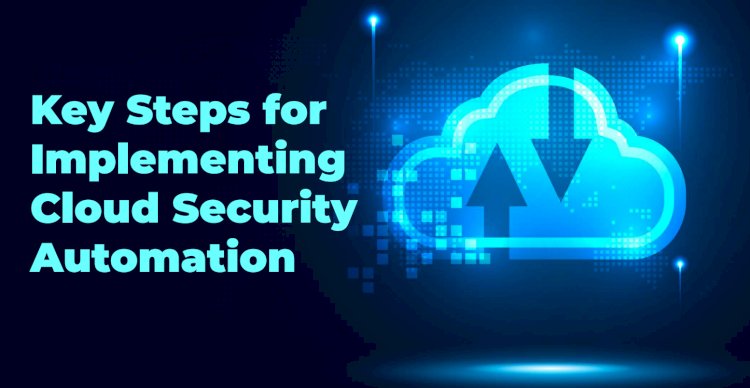
Key Steps for Implementing Cloud Security Automation
As organizations continue to migrate critical workloads, applications, and sensitive data to cloud environments, ensuring strong security has become one of the most important priorities for modern businesses. Traditional security methods that rely heavily on manual monitoring and intervention are no longer sufficient to handle the scale, complexity, and speed of cloud infrastructure. This is where cloud security automation plays a crucial role. Implementing cloud security automation allows organizations to automatically detect threats, enforce security policies, reduce human error, and respond to incidents in real time. However, successful implementation requires a structured approach and careful planning. The first key step is assessing the current cloud environment by identifying existing infrastructure, applications, storage systems, user access controls, and potential security gaps. This helps organizations understand what needs protection and where automation can deliver the most value. The second step involves defining clear security policies and compliance requirements based on industry regulations and organizational standards. Automated systems can then enforce these policies consistently across cloud resources without requiring manual oversight. The next important step is implementing identity and access management controls to ensure only authorized users can access sensitive systems and data. Automating user authentication, privilege management, and role-based access helps minimize unauthorized access risks. Another critical step is deploying continuous monitoring and threat detection systems that automatically scan cloud environments for suspicious activity, vulnerabilities, configuration errors, or unusual behavior patterns. Security automation tools can immediately generate alerts or trigger predefined response actions when threats are detected. Organizations should also automate vulnerability management by regularly scanning systems for outdated software, missing patches, and configuration weaknesses while automatically applying updates whenever possible. Integrating automated incident response workflows is equally important, allowing systems to isolate compromised workloads, block malicious traffic, or initiate recovery procedures without waiting for manual intervention. In addition, businesses should focus on securing cloud configurations through automated compliance checks that continuously verify whether cloud settings meet security standards and instantly correct misconfigurations that could expose sensitive data. Another essential step is implementing encryption automation for data both at rest and in transit, ensuring sensitive information remains protected even if unauthorized access occurs. Organizations must also integrate security automation with DevOps practices through DevSecOps, where automated security testing is embedded directly into the software development pipeline to identify vulnerabilities before deployment. Regular auditing and reporting should also be automated so security teams can maintain visibility into system health, compliance status, and historical threat activity. Finally, employee training remains a vital component because even highly automated systems require teams that understand security best practices and can effectively manage automated tools. By following these key steps, organizations can build a proactive cloud security strategy that improves operational efficiency, strengthens threat protection, ensures compliance, and creates a more resilient cloud infrastructure capable of supporting long-term business growth in an increasingly complex digital landscape.